
The Jefferson County Current Owner Card
A Jefferson County parcel card puts the Parcel Owners field first. Around it sit the parcel number, the site and billing addresses. A brief legal description rounds it out. An update date shows when the roll last refreshed. Ownership can rest with one person or several people. A trust or a company can also own it. For today's name, that field is the place. The transfer panel, with its document date and number, explains how the name got there.
| Parcel Owners | Name or names on the current roll |
|---|---|
| Parcel Address | Site address associated with the land |
| Billing Address | Mailing point for tax correspondence |
| Parcel Number | Identifier that ties the county records together |
| Recorded Transfer | Type, date, sale amount, and document number when shown |
| Data Updated | Timestamp for the displayed parcel information |
The Fort Atkinson card pairs a Parcel Owners field with a separate Billing Address. Its transfer list runs long. Warranty, TOD, trust, guardian, and quitclaim deeds all appear. A roll name is not an occupant, and a billing address is not proof of where an owner lives. The sample Jefferson County parcel record shows the layout.
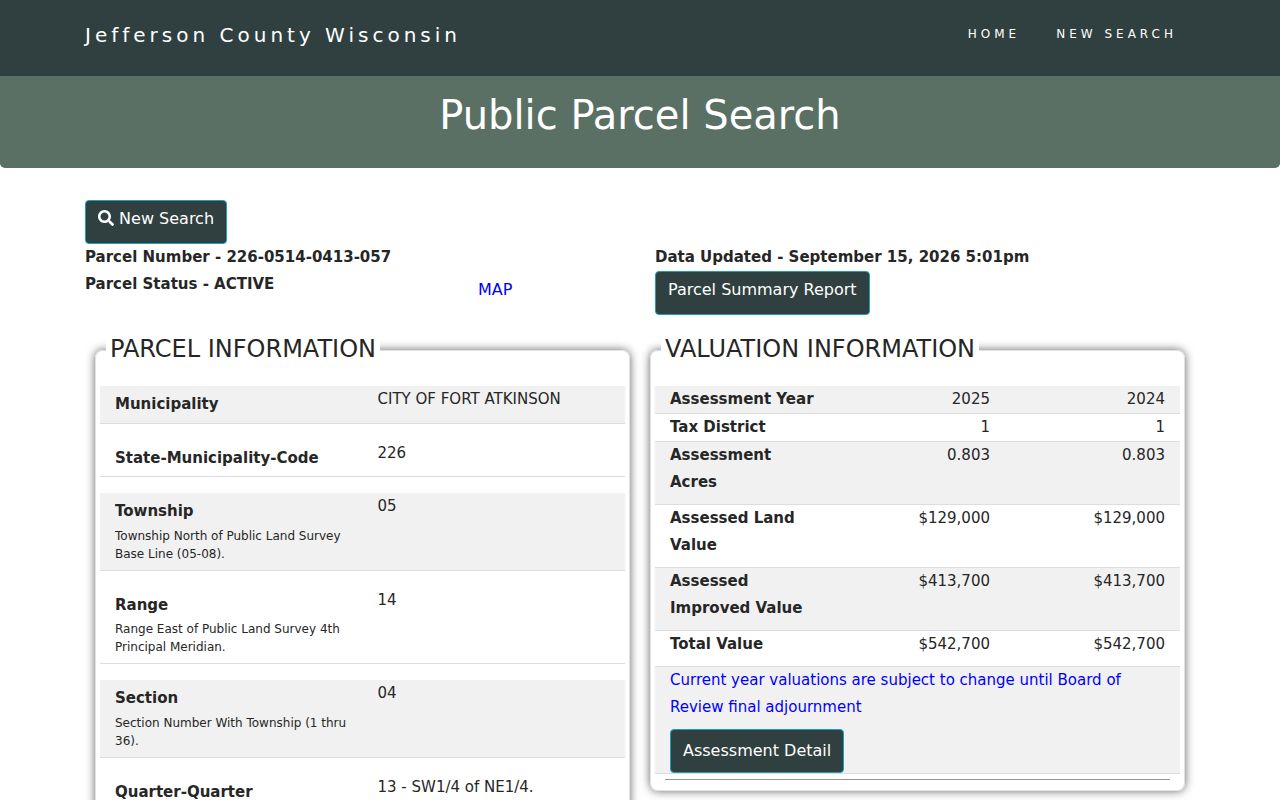
Check the newest transfer number against the roll owner.
Confirming the Current Jefferson County Owner
A current owner check weighs the roll against the newest recorded deed. Start with the parcel card. Note its update timestamp. Then pull the latest transfer number or grantee name from the Register of Deeds index. The deed's legal description should match the parcel exactly. For a brand-new transaction, ask the Register of Deeds about filing status. Then recheck the roll later. A delayed field is not final.
Whenever you report a result, name the source system and the date checked. That matters most when the deed and the public roll carry different update dates.
- Search the address or parcel in Public Parcel Search and note the Parcel Owners field.
- Copy the latest transfer document number and date from the parcel card.
- Open the recorded instrument and compare grantee, legal description, and vesting language.
- For an entity owner, check its public DFI record without treating an agent as the owner.
- Owner of record
- The name or entity shown by the current parcel roll.
- Vesting
- The form in which a deed names the grantee or grantees.
- Registered agent
- A listed contact for an entity, not necessarily a beneficial owner.
Contact Clues in Jefferson County Records
Tax mail goes to whatever sits in the Billing Address field. That may be another city, a care-of line, or an entity office. The parcel card lists the situs address separately. Route any property matter through an official mailing channel. Never assume a billing address is where the owner lives. When a parcel has no street address at all, its PLSS fields and legal description still identify the land in the county records.
Lawful use. A Jefferson County current-owner lookup is for property research and due diligence. Do not use a public name or address to stalk, threaten, or harass a person.
When the Jefferson County Roll Has Not Caught Up
A freshly recorded deed often lands in the Register of Deeds index before the assessor's owner field moves. The parcel card carries an update date. Compare it with the transfer date. If the deed was filed after that last update, the gap is just timing. Even so, verify the instrument and its legal description. A verbal report of a closing is not enough.
Assessments work on their own clock. Current-year values can shift until the Board of Review finally adjourns. Owner and assessment updates are separate events. When asking Land Information or the Register of Deeds whether the public display has refreshed, keep the deed document number and parcel number together.
A roll snapshot is the county's current published field, not a guarantee that same-day transactions already appear.
Jefferson County Transfers on the Parcel Page
Each transfer line lists a document type, status, document date, sale amount, and number. One Jefferson County card mixes warranty deeds with a transfer-on-death deed, a trust deed, a guardian deed, and a quitclaim. A City of Jefferson parcel adds a judgment entry to its list. Start with the document dates. The lesson is simple. Read the newest document, not just the familiar type.
The City of Jefferson sample names two owners. It gives a Homeland Addition lot-and-block description as well. Its list links the roll to a current filing. For the parties and legal terms, though, the deed image itself is required. The Jefferson parcel result shows the multiple-owner and transfer layout.
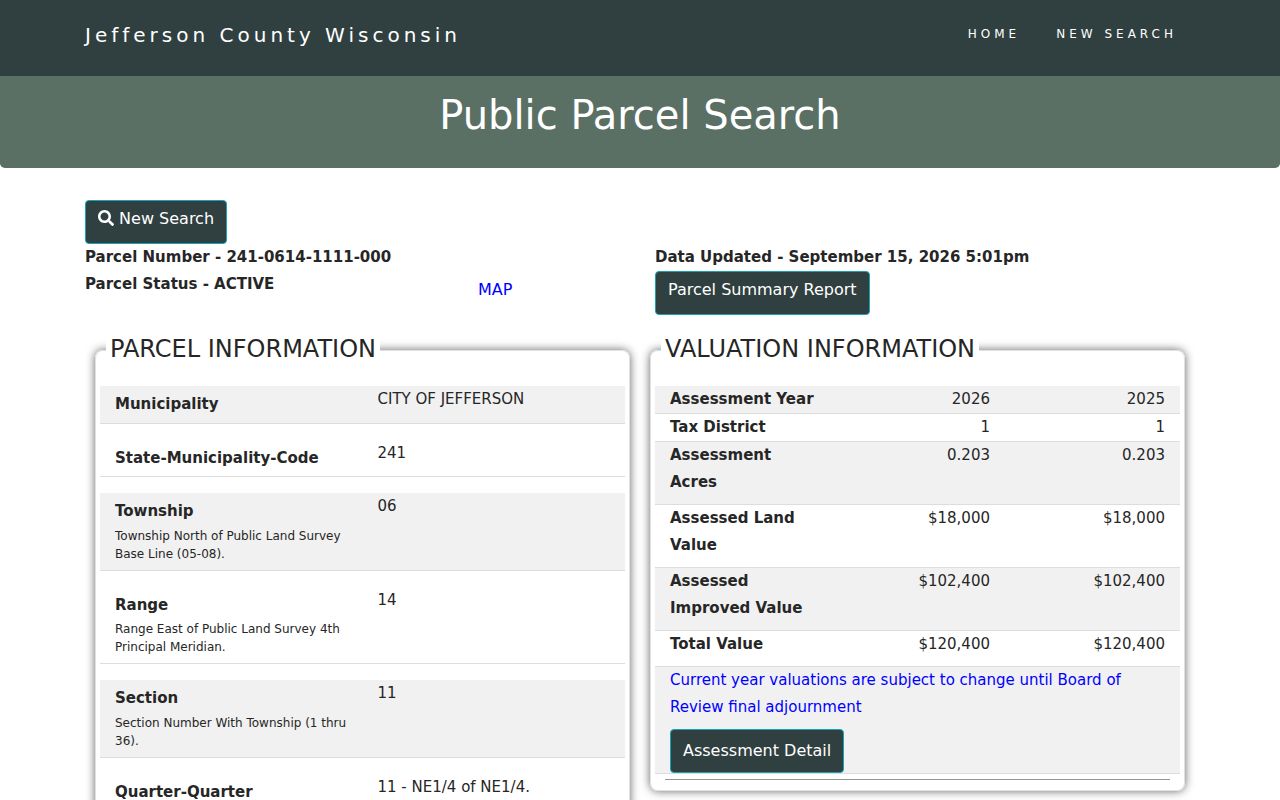
Check that the grantee names and lot and block wording line up before you call a parcel transfer a match.
Jefferson County Mailing and Site Addresses
Parcel Addresses marks where the land sits. Billing Address shows where tax mail goes. The two often match. A Jefferson County parcel can lack a street address yet still carry a mailing location, parcel number, acreage, and legal description. These fields trace a contact path, not a resident.
An out-of-area address deserves a second look. Verify the situs on the map first. A mailing address may belong to an owner, trustee, manager, or other tax contact, so never copy it into a record as the site address.
The sample Jefferson County card with no parcel address shows the split.
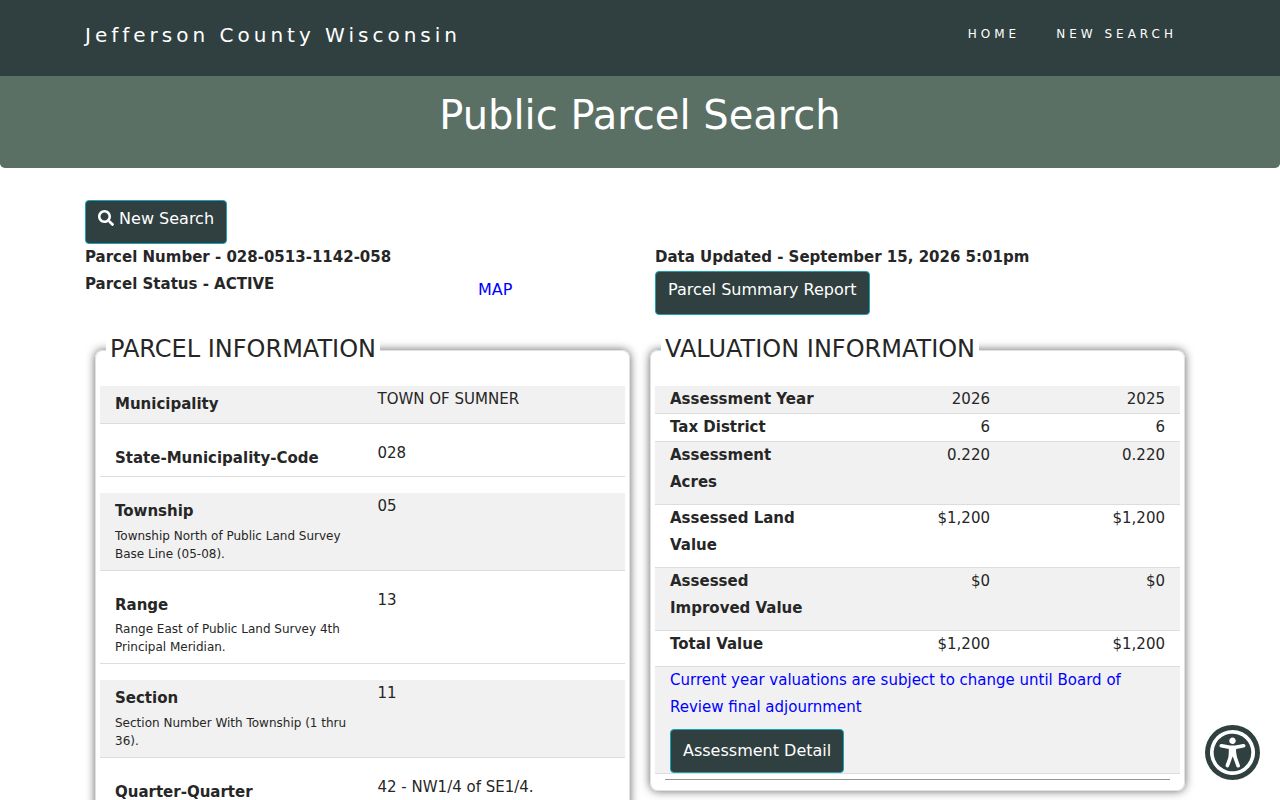
Anchor the owner record with parcel number and legal description.
Jefferson County LLC and Trust Owners
An LLC, a trust, or an estate can hold title. The tax roll will show that entity as the owner of record. The recorded deed names the grantee and any vesting language in the instrument. For a Wisconsin entity, the Department of Financial Institutions offers useful detail. A DFI lookup returns the entity's name, status, registered agent, registered office, entity ID, charter history, and the most recent annual-report year. There are real limits, though. DFI does not list every member of a domestic LLC. The registered agent tells you nothing about who benefits from the property.
Start with the exact legal name printed on the parcel card. Run it through DFI's advanced search. The registered office can be compared against the billing address as a rough clue. Nothing replaces the deed. The latest recorded instrument is the only source for one question. It shows whether the entity actually took title to that parcel. The county LLC parcel card displays the entity name beside the parcel data.
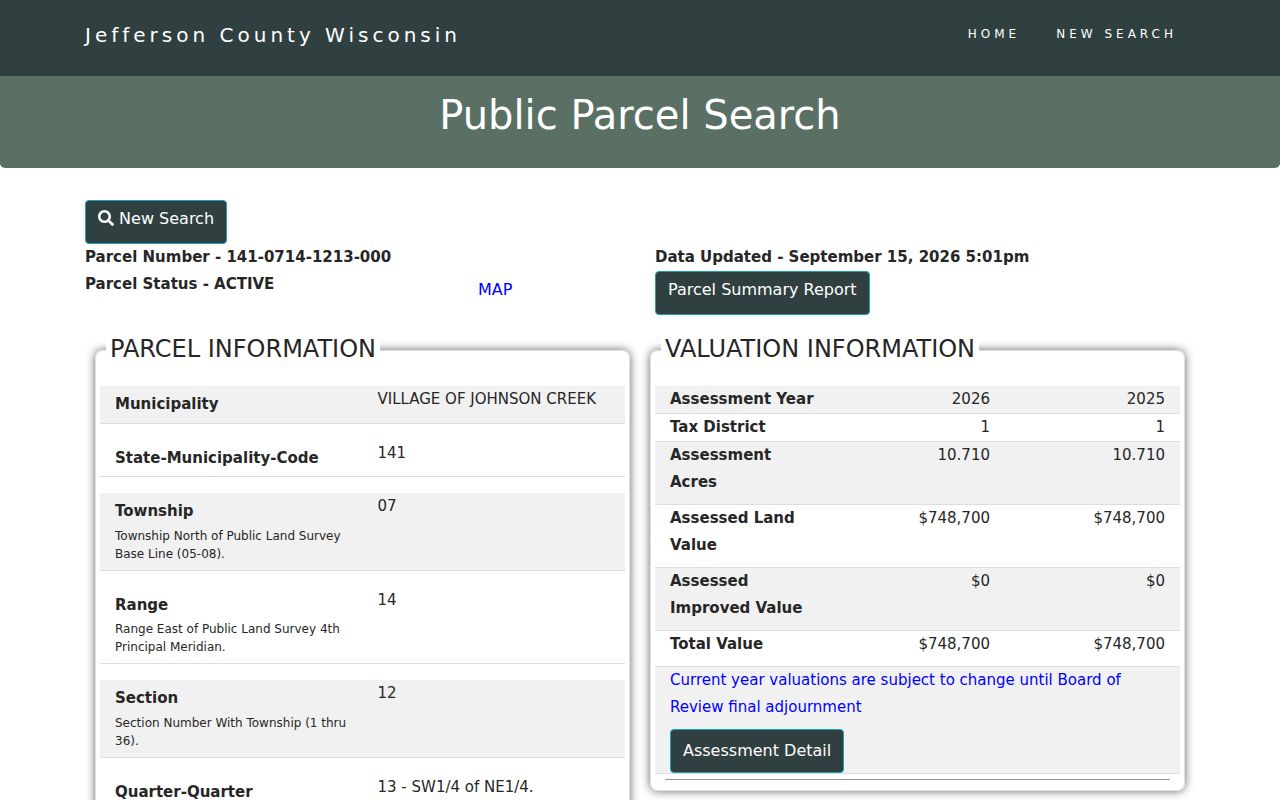
Entity records can explain a name on the tax roll, but they never substitute for the deed itself.
Privacy in Jefferson County Owner Records
Wisconsin public-records law is not absolute, and certain addresses get special protection. Safe at Home participants may use an assigned substitute address. After proper notice, they may ask that the real address stay undisclosed. Confidential-elector treatment shields an address on the voter roll. None of this allows a deed to be pulled from the Register of Deeds. Anyone with a safety concern should contact the program directly about its process.
MyVote serves voters, not property researchers. It is a voter-information service, not an ownership source. Its name and address lookup carries its own confidentiality rules. Never treat its results as evidence of who lives at a parcel. Keep any owner-of-record search tied to a legitimate property purpose. Never publish a protected address. The Wisconsin MyVote service shows the voter lookup route along with those controls.
Voter information never proves who owns or occupies a property.
Earlier owners raise a different historical question; the deed-chain route traces past transfers instead.